By
Sanna Kröger
Julia Larsen-Disney
Isabella Valentini
Nicklas Jungander
Despite progress across sectors, Inclusion (as part of DEI) remains a structural challenge in global manufacturing — often seen as one of the hardest environments to translate ambition into measurable action. Yet, companies that integrate inclusion into the core of their operations are already experiencing tangible business benefits.
MU’s Global Manufacturing & Materials Practice, together with our Global ESG Practice, recently hosted a webinar discussion moderated by Sanna Kröger, Group Director from MU Helsinki.
The session featured insightful contributions from Mara Zavagno, VP People & Culture and Chief DEI Officer at Konecranes, and Eric Way, an independent DEI-expert, ex- Schindler Group and Volvo Group — both recognised leaders in driving inclusion within manufacturing industry. (DEI- Diversity-Equity-Inclusion)
Inclusion Must Be Contextual and Operational
In the panel discussion, Mara Zavagno highlighted the challenge of balancing global DEI ambitions with local cultural realities. Manufacturing organisations operate across diverse regions where local values and operational contexts vary significantly. She emphasised that for inclusion efforts to be authentic and effective, they must be deeply rooted in local culture and business practices rather than imposed as uniform global programs.
You cannot attack something that is part of the values. You need to put this closer to your culture, even more than before.
This means inclusion initiatives must be adaptable and sensitive, allowing local leaders to tailor approaches in ways that resonate with their teams. It is a critical factor for building genuine engagement and trust across the organisation.
Linking Inclusion to Business Performance
Eric Way stressed that inclusion in manufacturing can no longer be seen as just a HR initiative or corporate messaging. Instead, it must deliver measurable business outcomes — from improved operational performance to talent attraction and retention.
When you are able to make this correlation right, then you don't need the advertisement or the promotion anymore. You do the substance.
In practice, this means that inclusion is integrated into leadership expectations and day-to-day decision-making. Inclusion drives innovation, operational excellence, and competitive advantage — essential elements in a sector facing rapid transformation and global competition.
Leadership Accountability Across All Levels
Both speakers agreed that DEI responsibility cannot rest solely with HR functions. Operational leaders, including plant and engineering managers, must actively lead and embed inclusive practices. Eric pointed out that without leadership commitment at all levels, inclusion risks becoming a disconnected corporate initiative.
HR is an important enabler. It’s not the doer… It really has to be the leaders of the organisation and everyone in the organisation who’s doing the inclusion.
This shared ownership ensures that inclusion is reflected in daily behaviours and operational realities, reinforcing a culture where diversity thrives.
Empathy and Agility in Leadership
Mara also underscored that successful inclusion requires leaders to be empathetic and agile, continuously adapting their approach as organisational and cultural contexts evolve. There is no one-size-fits-all solution; leaders must listen actively to understand what inclusion means for their teams and respond with flexibility.
Why This Matters Now
Manufacturers face mounting pressure from investors, customers, employees, and regulators to meet ESG standards — with DEI being a cornerstone. Evidence from global research, including McKinsey, confirms that diverse leadership teams coupled with inclusive cultures significantly outperform peers, financially and operationally.
For manufacturing — a sector challenged by talent shortages, operational complexity, and global market shifts — embedding DEI is no longer optional. It is a strategic imperative for sustainable success.
About Speakers
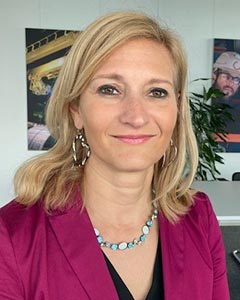 Mara Zavagno, VP People and Culture BA IE and Chief Diversity Officer for Konecranes.
Born Italian, now living in Germany, Mara was first appointed to D&I Officer in 2019, having a long career in HR leadership first at Terex and Konecranes. Konecranes specialises in the manufacture and service of cranes and lifting equipment and employs approximately 16,500 employees in 50 different countries.
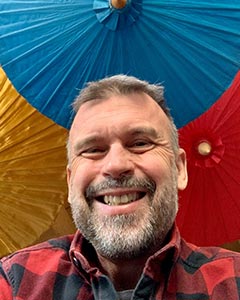 Eric Way, Multicultural Diversity & Inclusion leader
Born American, now living in France, Eric started his career as a mechanical engineer and moved into the area of Diversity and Inclusion in 2012. For over 12 years he led corporate Diversity and Inclusion strategies at Volvo Group and then Schindler Group. Eric has worked to conceptualize D&I themes and create practical implementation strategies which have tangible impacts on performance and innovation.
About Mercuri Urval
MU partners with manufacturing leaders to build high-performing, future-ready teams through inclusive leadership and evidence-based talent decisions. Our science-driven MU Executive Search™ method widens the candidate pool and raises the bar — systematically including diverse, qualified leaders and making selection decisions grounded in competence and facts rather than assumptions.